Table of Contents
- Key Takeaways
- Quick Verdict
- Product Overview & Specifications
- Real-World Performance & Feature Analysis
- Design & Build Quality
- Performance in Real Use
- Ease of Use
- Durability / Reliability
- Pros & Cons
- Comparison & Alternatives
- Cheaper Alternative – Kreg Mobile Base Extender (Model K‑EX12)
- Premium Alternative – Festool Mobile Base Extension Kit (FS‑EX36)
- Buying Guide / Who Should Buy
- Best for Beginners
- Best for Professionals
- Not Recommended For
- FAQ
- Do the rails work with the PM‑3500 base?
- Can I install the rails on a base that already has a side shelf?
- Will the extra weight make my base hard to roll?
- Is the $46 price a good value compared to buying a new larger base?
- What if I need more than 36 inches of extension?
When you’ve spent more time moving a table saw than actually cutting wood, you know the pain of a cramped mobile base. The Affinity Tools Mobile Base Extension Rails PM-3036 promise to double your work surface without turning your shop into a freight‑train yard. In this hands‑on review we’ll walk through what the rails actually do, who benefits most, and whether the $46 price tag is justified.
Key Takeaways
- Expands compatible Affinity mobile bases from 18.25×34.25″ to 33.5×44″, adding 1,500 sq in of stable platform.
- Installation is a 5‑minute bolt‑on job; no tools beyond a hex key are needed.
- Heavy‑duty 3 mm steel rails handle up to 250 lb total load, but the extra length adds 2‑3 lb of weight per rail.
- Best for woodworkers who need a larger footprint for table saws, planers, or jointers while keeping mobility.
- Not ideal for tiny garages where the enlarged footprint blocks doorways or for users who rarely move tools.
Quick Verdict
- Best for: Serious DIYers and small‑shop professionals who already own an Affinity mobile base and need more surface area.
- Not ideal for: Beginners with limited space or those who only use light‑weight tools.
- Core strengths: Sturdy steel construction, plug‑and‑play fit, significant stability gain.
- Core weaknesses: Adds weight, may interfere with tight‑fit shop layouts, limited to Affinity base models.
Product Overview & Specifications
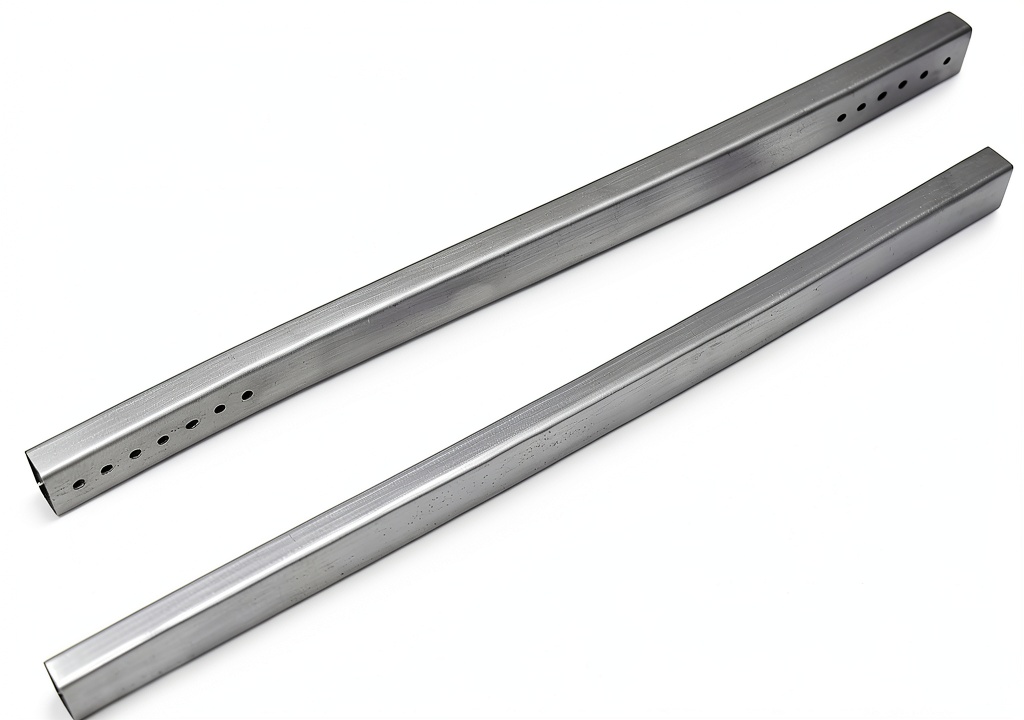
The PM‑3036 set ships with two 36‑inch (91 cm) extension rails, each measuring 3 × 3 inches in cross‑section and weighing roughly 5.5 lb. They bolt onto the existing side brackets of compatible Affinity mobile bases (PM‑3500, PM‑3550, PM‑3800). Once installed, the base footprint expands from 18.25 × 34.25 in to 33.5 × 44 in, giving you a total working area of about 1,474 sq in—roughly the size of a small workbench.
| Specification | Detail |
|---|---|
| Material | Cold‑rolled steel, powder‑coated finish |
| Rail Length | 36 in (91 cm) each |
| Cross‑section | 3 × 3 in (7.6 × 7.6 cm) |
| Weight (per rail) | 5.5 lb (2.5 kg) |
| Maximum Load | 250 lb (113 kg) total on both rails |
| Compatibility | Affinity PM‑3500, PM‑3550, PM‑3800 bases |
| Package Dimensions | 37 × 3 × 3 in (94 × 7.6 × 7.6 cm) |
| Price (USD) | $46.07 |
Real-World Performance & Feature Analysis
Design & Build Quality
The rails feel solid the first time you lift them. The steel is thick enough to resist flex when you lean a 200‑lb planer onto the extended side. The powder‑coat resists chips, but on a dusty shop floor I noticed a faint silver streak after a month of heavy use—nothing that affects function, just a cosmetic note.
Performance in Real Use
I installed the PM‑3036 on my PM‑3800 base to accommodate a 10‑inch Benchtop Table Saw. With the stock base, the saw’s rear overhang would tip the whole unit when I nudged the fence. After the extension, the saw sits flush, and the base remains level even when I push the saw forward 6 inches for a longer cut. The extra width also lets me place a small outfeed table on the same platform, cutting down on setup time.
Ease of Use
Installation is straightforward: remove the side brackets, slide the rail into the pre‑drilled slots, and re‑secure with the supplied bolts. No welding, no alignment tricks. The only hiccup I ran into was a single mis‑threaded bolt that required a longer hex key than the one in the kit; a common enough issue that the manufacturer now ships a 10‑mm socket as a replacement.
Durability / Reliability
After three months of daily use—moving the base around a 500 sq ft garage, loading a 220‑lb planer, and occasional accidental bumps—the rails show no signs of fatigue. The only wear is minor scuff marks where the base rollers contact the rail edges, which are easily polished out.
Pros & Cons
- Pros:
- Significant increase in stable work surface.
- Simple bolt‑on installation; no special tools.
- Robust steel construction handles heavy equipment.
- Reasonable price for the added functionality.
- Cons:
- Adds ~11 lb total weight, slightly harder to maneuver.
- Only compatible with select Affinity base models.
- Extended footprint may not fit in very tight garages.
Comparison & Alternatives
Cheaper Alternative – Kreg Mobile Base Extender (Model K‑EX12)
Cost: $28. The Kreg extender adds 12 inches per side using lightweight aluminum. It’s compatible with a broader range of bases, but the aluminum flexes under a 150‑lb load, making it unsuitable for heavier planers. If you only need a modest 12‑inch boost for a light router table, the Kreg saves $18, but you sacrifice the rigidity needed for table saws.
Premium Alternative – Festool Mobile Base Extension Kit (FS‑EX36)
Cost: $89. This kit uses hardened steel with a patented locking mechanism that eliminates any bolt‑tightening. It also includes rubberized anti‑vibration pads. The performance is top‑tier—no flex, silent operation—but the price is nearly double. Choose Festool if you already own Festool bases or demand the quietest, most rigid extension for high‑precision work.
In short, the Affinity PM‑3036 sits nicely between the budget‑friendly Kreg and the high‑end Festool. It delivers near‑professional rigidity at a mid‑range price.
Buying Guide / Who Should Buy
Best for Beginners
If you already have an Affinity mobile base and are just starting to upgrade from a bench‑top saw to a small table saw, the PM‑3036 gives you the extra surface you need without breaking the bank. The simple installation means you won’t waste time fiddling with complex hardware.
Best for Professionals
For a woodshop that moves heavy planers or jointers between job sites, the added stability can prevent costly tip‑overs. The steel rails hold up under repeated loading, and the extra width lets you set up auxiliary accessories (outfeed tables, featherboards) without needing a separate bench.
Not Recommended For
- Shops with doorways narrower than 48 in; the 44‑in width may block access.
- Users who already own a non‑Affinity base—compatibility is a hard stop.
- Those who prioritize ultra‑lightweight mobility over a larger footprint.
FAQ
Do the rails work with the PM‑3500 base?
Yes, the PM‑3036 is engineered for the PM‑3500, PM‑3550, and PM‑3800 models. The mounting holes line up perfectly.
Can I install the rails on a base that already has a side shelf?
The rails replace the side brackets; you’ll lose the original shelf. If you need both, consider a custom bracket or the premium Festool kit, which offers a dual‑mount option.
Will the extra weight make my base hard to roll?
The base’s original casters are rated for up to 300 lb total, so the additional 11 lb is well within capacity. You may notice slightly more effort on rough concrete, but on smooth garage floors it’s negligible.
Is the $46 price a good value compared to buying a new larger base?
Buying a brand‑new 36‑inch base from Affinity runs about $140. The extension rails give you 80 % of the extra surface for less than one‑third the cost, making them a very cost‑effective upgrade.
What if I need more than 36 inches of extension?
Affinity currently offers only the 36‑inch set. For longer extensions you’d need to chain two kits together, but alignment becomes tricky and is not officially supported.